Women deserve better
Women's health has been underfunded, misunderstood, and overlooked for too long. That has to change.
Amanda advocates at the intersection of women's health and evidence-based medicine to push for the research, investment, and care that women have always deserved.
Anorexia nervosa advocacy



- May 18 — Columbia University, Columbia Center for Eating Disorders
- May 20 — Webinar with UK Digital Clinical Excellence (DiCE)
- May 29 — University of Pittsburgh, Department of General Internal Medicine
It doesn't have to be this way.
The rising tide of anorexia nervosa — already increasing before GLP-1 agonists entered the picture — is not inevitable. As individuals, families, communities, policymakers and entire industries, we have enormous power to alter the outcome of this story. Here are ten strategies, starting with what each of us can do right now, and building toward the systemic change we urgently need.
Advocate for your kid
Use specific, clinical language to convey urgency when seeking care, and push past gatekeepers to get timely evaluation from your child's doctor.
Stop dieting — and stop talking about it
Diet culture in the home is a known risk factor for eating disorders, and the behaviors we model for our kids are entirely within our control to change.
Limit social media for your kids
The evidence linking social media to eating disorders and mental health harms in adolescents is clear — delay smartphones and advocate for age-limit legislation.
Change how health is measured in schools
Annual BMI report cards are ineffective and harmful — replace them with comprehensive pediatric screenings that also check for eating disorder risk.
Re-imagine eating disorder education for clinicians
Eating disorders receive less than two hours of time during medical training — mandate dedicated rotations and reframe EDs as metabolic spectrum disorders across all specialties.
Screen for EDs before and during GLP-1 treatment
Drug companies, professional societies and regulators must work together to require eating disorder screening before and throughout GLP-1 agonist therapy.
Strengthen oversight of compounding pharmacies and wellness platforms
Unrestricted online access to GLP-1 drugs is dangerous — regulators must require live video consultations, verifiable records, and centralized prescription reporting.
Conduct rigorous studies on GLP‑1s and ED risk
Large real-world studies and clinical trials must include eating disorder signs and symptoms as explicit safety endpoints.
Expand access to and insurance coverage for ED treatment
With waitlist status predicting mortality, governments must invest now in training more clinicians, building outpatient centers, and reforming the insurance coverage maze.
Invest in new drugs to treat anorexia nervosa
The science has matured enough to identify druggable targets — venture investors and drug companies must now fund translational research to turn those targets into treatments.
Mifepristone access




Turn understanding into action
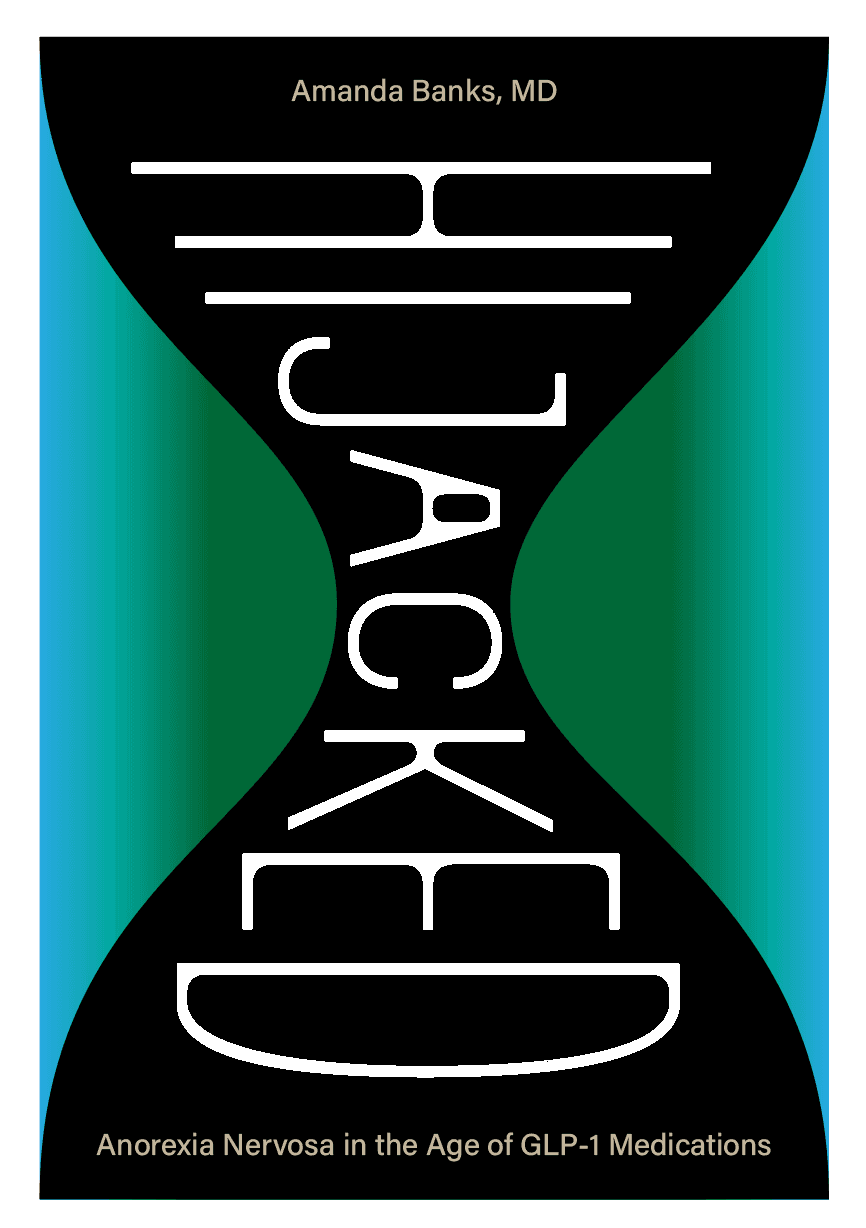
Hijacked synthesizes the science, policy gaps and human toll of anorexia nervosa in the GLP-1 era to give every stakeholder the tools to act. Together we can change the outcome of this story.